Buying your first drone is exciting, but the drone itself is only part of the setup. The right accessories can make flying easier, safer and less frustrating. The wrong accessories just sit in a drawer.
For most beginners, I would not buy every drone accessory straight away. You do not need a hard case, ND filter set, tablet mount, lanyard, landing mat, spare charger, waterproof bag and every possible add-on before your first flight. That is how a simple beginner drone purchase turns into an expensive bundle of things you may barely use.
But there are a few accessories that are genuinely worth considering from day one.
If I were buying my first drone in the UK, I would prioritise spare batteries, a suitable microSD card, a carry case, spare propellers and possibly a landing pad. After that, I would only add accessories once I knew how and where I actually liked flying.
Table of Contents
ToggleQuick Picks: Best Drone Accessories for Beginners
| Accessory | Priority | Why It Matters |
|---|---|---|
| Spare batteries | Essential | More flying time and better practice sessions |
| Suitable microSD card | Essential | Needed for reliable 4K footage |
| Carry case or drone bag | Essential | Protects the drone and keeps the kit together |
| Spare propellers | Essential | Cheap, useful and easy to damage when learning |
| Landing pad | Useful | Helps on grass, sand, gravel and damp ground |
| Charging hub | Useful | Makes battery charging easier |
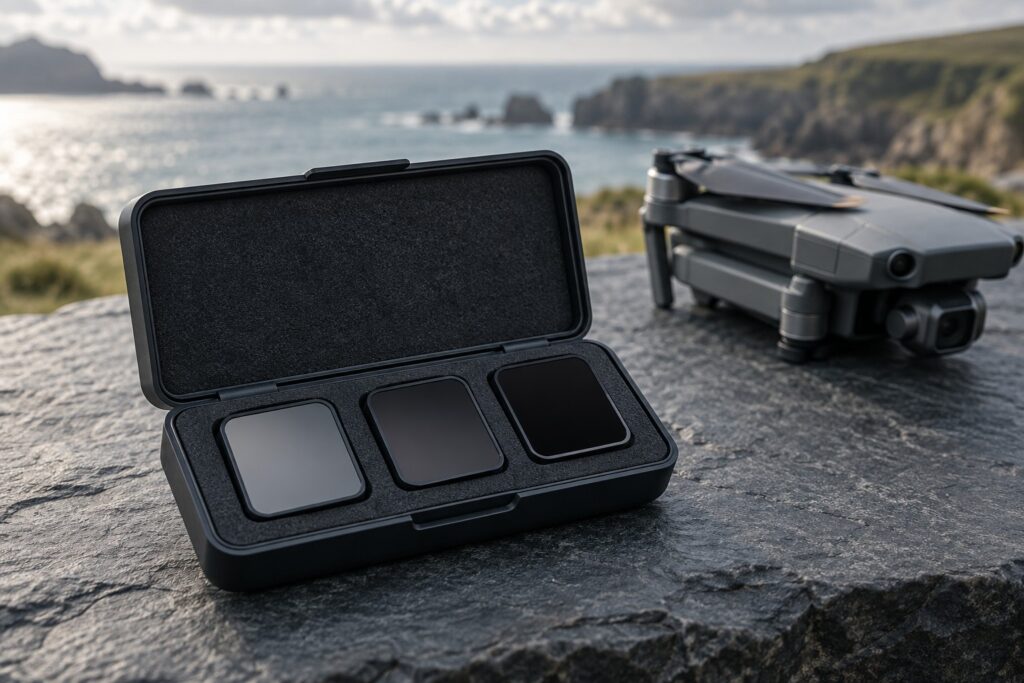
| ND filters | Optional at first | Useful for smoother cinematic video |
| Propeller guards | Depends on drone | Useful for some drones, unnecessary for others |
| Controller lanyard | Optional | Helps if you fly for longer sessions |
| Drone insurance | Depends on use | Important for commercial flying; optional for many hobby flyers |
The Accessories I Would Buy First
If you want the simplest answer, this is the beginner accessory setup I would start with:
- Spare battery or Fly More Combo
- Suitable microSD card
- Carry case
- Spare propellers
- Landing pad if you fly from grass, sand, gravel or damp ground
That is enough for most beginners.
The most common mistake is spending too much on “nice to have” accessories before you have worked out how often you will fly. Start with the accessories that solve real problems: short flight time, storage, transport, minor damage and awkward take-off areas.
Spare Batteries or Fly More Combo
Spare batteries are the first drone accessory I would consider.
Beginner drone flights often feel shorter than expected. Some drones advertise impressive flight times, but real-world flying is affected by wind, temperature, return-to-home margin, filming style and how confidently you fly. If you only have one battery, your first few practice sessions can feel frustratingly short.
That is why a Fly More-style bundle can be worth buying. You usually get extra batteries, a charging hub, spare propellers and sometimes a carry case. It costs more upfront, but it can be better value than buying everything separately later.
For most beginners, extra batteries are not about flying for hours. They are about giving yourself enough time to relax, practise and correct mistakes.
Who should buy spare batteries?
Buy spare batteries if you expect to practise regularly, travel with your drone, film family days out, shoot landscapes or use the drone for more than very occasional garden flights.
When can you skip them?
You can start with one battery if you are unsure whether you will use the drone often. But if you already know you will fly regularly, extra batteries are one of the few accessories I would buy early.
Suitable MicroSD Card
A good microSD card is essential if your drone records to removable storage.
This is not the place to buy the cheapest card you can find. Drone footage, especially 4K video, needs a card that can write data reliably. A poor-quality or slow card can cause recording issues, dropped footage or frustration when transferring files.
For most beginner camera drones, I would look for a reputable microSD card with a suitable speed rating for 4K video. In practical terms, that usually means choosing from well-known ranges such as SanDisk Extreme, Samsung Pro Plus, Kingston Canvas Go! Plus or Lexar cards designed for action cameras and drones.
Check the drone manufacturer’s recommended card list before buying. DJI, for example, publishes recommended microSD cards for its drones, and many models need cards suitable for high-bitrate video.
To find the best microSD for your particular drone, read our article on the best microSD cards for drones UK.
What size microSD card should beginners buy?
For most beginners, 64GB or 128GB is a sensible starting point.
A 32GB card can work, but it fills quickly if you shoot 4K video. A 256GB card can be useful if you film a lot, but beginners are often better with one or two reliable 128GB cards rather than one huge cheap card.
Should you rely on internal storage?
On drones with a card slot, a suitable microSD card gives you removable recording storage. DJI Neo 2 records to its 49GB of internal storage and does not support an external microSD card. Transfer its recordings and keep a second copy before clearing space; buy a card only for equipment that can use it.
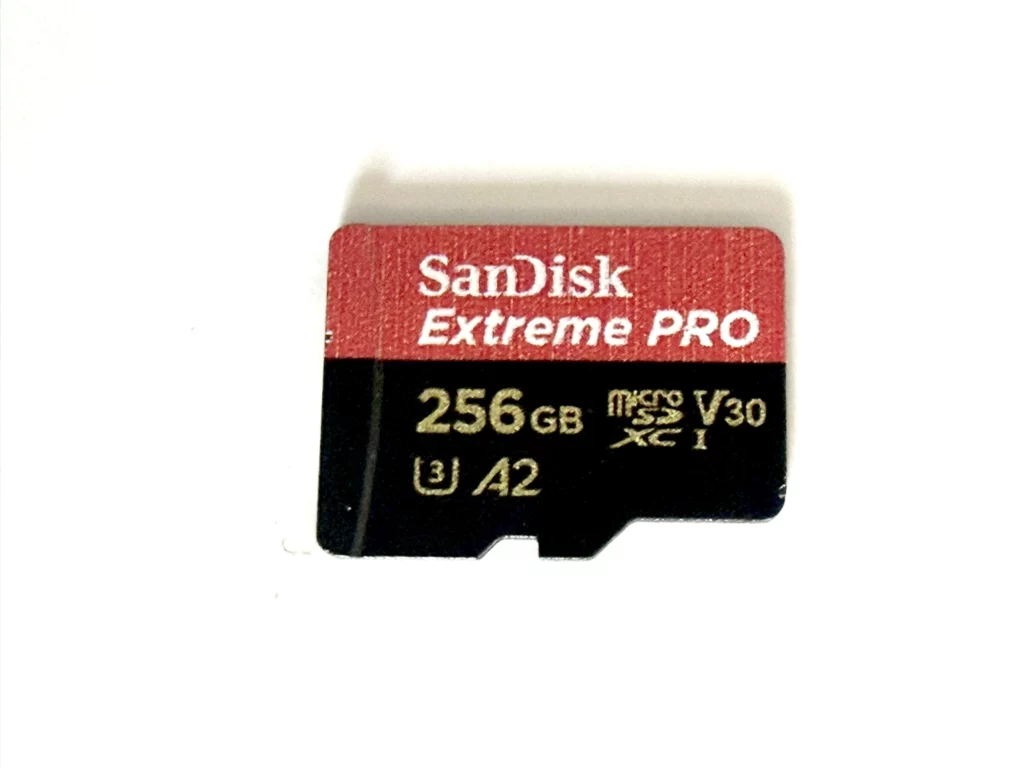
👉 Check price for our recommended SD Card – SANDISK Extreme PRO 256GB
Carry Case or Drone Bag
A carry case is one of the most useful beginner accessories because it makes the drone easier to protect, store and actually take with you.
A drone without a case often ends up being awkward to carry. You need somewhere for the drone, controller, batteries, cables, spare propellers and microSD cards. If everything is loose in a rucksack, it becomes easier to forget something or damage the kit.
For beginners, I would usually choose a compact case that fits the drone, controller and at least two batteries. A hard case gives more protection, but a softer shoulder bag or compact organiser can be easier for travel and days out.
The best case depends on how you use the drone. If you mostly fly from the car, a harder case can be useful. If you walk, travel or film outdoors, a lighter bag may be more practical.
Our drone bag and case guide compares the carrying formats and shows how to check the drone, controller and battery fit.
What to look for in a drone case
Look for:
- space for the drone and controller
- slots for spare batteries
- room for cables and spare propellers
- decent padding
- a secure zip
- a size you will actually carry
A case that is too bulky can become annoying. The best beginner case is protective enough without making the drone feel like a burden.
Spare Propellers
Spare propellers are cheap, small and worth having before you need them.
Beginners make mistakes. You might clip long grass, touch a wall, tip over on landing or damage a propeller in a bag. Even slight damage can affect flight stability, noise and safety.
Do not wait until a propeller is badly damaged before replacing it. If a propeller is cracked, bent, chipped or visibly worn, replace it with the correct compatible part.
This is one accessory where I would avoid random low-quality replacements unless you are confident they are suitable. Propellers are not just cosmetic parts. They affect how the drone flies.
Should you buy official propellers?
Where possible, buy official or high-quality compatible propellers designed for your exact drone model.
Do not assume propellers for one DJI Mini model fit another. Always check compatibility before buying.
Landing Pad
A landing pad is not essential for everyone, but it is useful for many UK beginners.
If you fly from grass, sand, gravel, muddy paths, dusty tracks or damp ground, a landing pad helps create a cleaner take-off and landing area. It can protect the camera, gimbal, motors and propellers from dirt and moisture.
This is especially useful in the UK because flying conditions are often not perfectly dry. Grass can be wet, paths can be muddy, and coastal or countryside locations can be sandy or dusty.
A landing pad also gives you a clear visual target when landing. That can be reassuring when you are still learning.
Who should buy a landing pad?
Buy a landing pad if you fly from gardens, parks, fields, beaches, gravel paths or muddy ground.
You can skip it if you only fly from clean, dry, hard surfaces, or if your drone is designed around hand launch and palm landing.
For example, a landing pad is more useful with a traditional drone such as the DJI Mini 4K or Potensic ATOM than it is with a palm-launched drone such as the DJI Flip.
Before choosing a diameter, use our drone landing-pad size guide to compare usable space, carrying size and the surface where you will fly.
Battery Charging Hub
A charging hub becomes useful once you own more than one battery.
Charging multiple drone batteries one by one can be annoying. A charging hub keeps things neater and makes it easier to prepare for your next flight session.
Some Fly More bundles include a charging hub, which is one reason they can be better value than buying a standard drone package and adding batteries later.
A charging hub is not always essential on day one, but if you buy extra batteries, it quickly becomes one of the most convenient accessories.
Who should buy a charging hub?
Buy a charging hub if you have two or more drone batteries and want a cleaner charging setup.
Skip it if you only have one battery or if the bundle you buy already includes one.
For the Mini 4 Pro, check our 30W versus 65W charger comparison before paying for a higher-wattage power supply.
For DJI Lito 1 or X1, the hub needs USB Power Delivery at 45W or more for parallel charging with same-model batteries. Our Lito charging and first-setup guide covers the charger, app and recording-storage checks before your first outing.
ND Filters
ND filters are useful, but most beginners do not need them immediately.
An ND filter reduces the amount of light entering the camera. This helps you use slower shutter speeds in bright conditions, which can make video look smoother and more natural.
That matters if you care about cinematic footage. It matters less if you are still learning to take off, land, frame basic shots and fly confidently.
I would treat ND filters as a second-stage accessory. Buy them once you are comfortable flying and you want better-looking footage, especially in bright daylight, over water, on beaches or in open landscapes.
Who should buy ND filters?
Buy ND filters if you want smoother video and you are ready to think more carefully about exposure, shutter speed and movement.
Skip them at first if you are still learning basic flying or mainly want casual clips.
Our Mini 4 Pro ND-filter guide for 25fps video shows how to choose a strength around the exposure you need.
For a Lito X1, our compatible ND filters and exposure-strength guide explains which DJI set fits and how to choose a density for 25fps video.
Propeller Guards
Propeller guards depend heavily on the drone.
For some beginner drones, propeller guards are useful because they reduce the chance of damaging propellers or clipping objects during low-speed practice. They can be helpful indoors, in tight spaces or when learning basic control.
But they are not always needed outdoors, and they can affect weight, battery life and wind handling. For some drones, they may also push the drone into a different weight category, so you need to check before fitting them.
If you are buying the DJI Flip, built-in propeller protection is already one of its main advantages, so you should not assume you need extra propeller guards. For drones such as the DJI Mini 4K or Potensic ATOM, optional propeller guards may be useful for cautious practice, but they are not something every beginner needs.
Who should buy propeller guards?
Buy propeller guards if you are learning in tight spaces, flying indoors with a suitable drone, or buying for a cautious beginner.
Skip them if you mostly fly outdoors in open areas and already have a drone with built-in propeller protection.
👉 Check compatible propeller guards
Do not add guards to an ordinary DJI Lito X1 C0/UK0 kit: DJI says they are not legally supported on that configuration in the EU/UK. Its separately certified Plus kit has different conditions. Check the X1 bundle and certification differences before buying those accessories.
Controller Lanyard
A controller lanyard is a small accessory, but some people find it useful.
It helps support the controller during longer flying sessions, especially if you are using a larger controller or standing around outdoors for a while. It can also reduce the chance of dropping the controller while adjusting settings, checking the screen or moving around.
This is not an essential first purchase. But if you fly often, walk between locations or use a heavier controller, it can be worth adding later.
Who should buy a controller lanyard?
Buy one if you fly for longer sessions or want extra security when holding the controller.
Skip it if your controller is light, your flights are short or you prefer to keep the setup minimal.
Tablet or Phone Mount
Most beginner drones use a phone with the controller, so the standard setup is usually enough.
For DJI Neo 2, check the transceiver and controller combinations before buying a new control setup. RC-N3 and RC-N2 use your compatible phone; RC 2 has its own screen. The aircraft needs its Digital Transceiver for any of those controllers.
A tablet mount can be useful if you want a larger screen, but it adds bulk and can make the controller setup feel more awkward. For beginners, I would not buy one immediately.
Start with your phone. If you later find the screen too small, especially when framing shots or checking focus and exposure, then consider a tablet mount.
Who should buy a tablet mount?
Buy a tablet mount if you already own a suitable tablet and want a larger screen for filming.
Skip it if you are just learning to fly. Your phone is usually fine.
Drone Insurance: Do Beginners Need It?
For hobby flying, drone insurance is not always compulsory. For commercial flying, third-party insurance is required.
That distinction matters. If you are flying your drone for paid work, business use, client footage, inspections, surveys or other commercial reasons, you need to understand insurance properly before flying.
If you are flying recreationally, insurance may still be worth considering. It can give extra peace of mind if you are worried about accidental damage, public liability or losing an expensive drone. Some hobby groups and drone clubs include insurance as part of membership, so that may be worth comparing.
For most beginners buying a drone for casual use, I would not put insurance above batteries, storage and a case. But I would not ignore it completely, especially if you are buying a higher-value drone such as the DJI Mini 4 Pro.
Note: This section is for general information only. Insurance requirements can depend on how and where you fly, so check current CAA guidance and policy details before relying on any cover.
Accessories You Probably Do Not Need Straight Away
Some accessories are useful later but unnecessary on day one.
Waterproof hard case
Useful for serious outdoor work, travel or rough storage, but too bulky for many beginners.
Expensive ND filter set
Useful once you care about cinematic video, but not essential while learning.
Tablet mount
Nice if you want a larger screen, but not necessary for most beginners.
Controller sun hood
Useful in bright light, but not a priority unless glare becomes a real problem.
Strobe light
Useful in some situations, especially for visibility, but most beginners should first focus on safe daytime flying in suitable conditions.
Large drone backpack
Useful if you carry lots of kit, but overkill for one small beginner drone.
The best rule is simple: buy accessories when they solve a problem you have actually experienced.
Best Accessories for DJI Flip
For the DJI Flip, I would prioritise:
- Spare battery or Fly More Combo
- Suitable microSD card
- Compact carry case
- Spare propellers
- ND filters later if you care about video quality
The DJI Flip already has built-in propeller protection, so extra propeller guards are not the obvious first accessory. A landing pad may also be less important if you mostly use palm take-off and landing.
The main upgrade I would look at is the Fly More Combo if the price difference is sensible. Extra batteries make the biggest practical difference.
Best Accessories for DJI Mini 4K
For the DJI Mini 4K, I would prioritise:
- Spare batteries or Fly More-style bundle
- Suitable microSD card
- Carry case
- Landing pad
- Spare propellers
- ND filters later
The Mini 4K is a traditional lightweight camera drone, so a landing pad is more useful than it is with the DJI Flip. It helps protect the gimbal and propellers when taking off from grass, sand or damp ground.
If you buy only the basic package, extra batteries and a case are the first things I would add.
Best Accessories for DJI Mini 4 Pro
For the DJI Mini 4 Pro, I would prioritise:
- Fly More Combo if the budget allows
- High-quality microSD card
- Protective case
- ND filter set
- Spare propellers
- Landing pad
Because the Mini 4 Pro is a more expensive and capable drone, it makes sense to protect it properly and support better footage. ND filters are easier to justify here than they are with cheaper beginner drones because buyers are more likely to care about video quality.
If you are spending Mini 4 Pro money, I would not cut corners on storage, batteries or protection.
Best Accessories for Potensic ATOM
For the Potensic ATOM, I would prioritise:
- Fly More Combo if priced well
- Suitable microSD card
- Carry case
- Spare propellers
- Landing pad
- Extra batteries
The Potensic ATOM is often strongest when the bundle value is good. If the Fly More Combo includes useful extras at a sensible price, it may be better than buying the standard version and adding accessories afterwards.
A landing pad is also useful because, like the DJI Mini 4K, the ATOM is a traditional camera drone rather than a palm-first drone.
What I Would Buy First
If I were buying accessories for my first drone, I would keep it simple.
I would buy a suitable microSD card, a spare battery or Fly More Combo, a protective carry case and spare propellers. If I expected to fly from grass, sand, gravel or damp ground, I would add a landing pad.
That setup solves the biggest beginner problems: not enough flying time, nowhere to store footage, awkward transport, minor propeller damage and poor take-off surfaces.
I would wait on ND filters, tablet mounts, lanyards and larger bags until I knew I needed them.
For most beginners, the best accessory setup is not the biggest one. It is the one that makes the drone easier to use, easier to protect and more likely to come with you when you leave the house.
Final Verdict: Which Drone Accessories Do Beginners Actually Need?
Most beginners should start with spare batteries, a suitable microSD card, a carry case and spare propellers.
A landing pad is worth adding if you fly from grass, sand, gravel or damp ground. A charging hub is useful once you have multiple batteries. ND filters are worth buying later if you want smoother, more cinematic video.
Do not buy accessories just because they look useful. Buy the ones that remove the main frustrations of beginner drone ownership.
The best first accessory is usually extra battery life. The second is reliable storage. The third is protection for the drone itself.
Once those are sorted, everything else can wait.
FAQ
What accessories do I need with my first drone?
Most beginners should start with spare batteries, a suitable microSD card, a carry case and spare propellers. A landing pad is useful if you fly from grass, sand, gravel or damp ground.
Do I need extra batteries for a drone?
Extra batteries are one of the most useful drone accessories. They give you more practice time and make flying less rushed. If you expect to fly regularly, a Fly More-style bundle can be worth considering.
What microSD card do I need for a drone?
For most beginner camera drones, choose a reputable microSD card suitable for 4K video. Look for a card recommended by the drone manufacturer and avoid very cheap, unknown cards.
Is 64GB enough for drone footage?
A 64GB card can be enough for casual flying, but 128GB is often a better choice if you shoot 4K video regularly. Many beginners are better with one or two reliable cards rather than one huge cheap card.
Do I need a landing pad for a drone?
You do not always need a landing pad, but it is useful if you fly from grass, sand, gravel, dusty paths or damp ground. It helps protect the drone’s camera, gimbal, motors and propellers.
Do I need ND filters for my first drone?
Not immediately. ND filters are useful once you care about smoother, more cinematic video, especially in bright conditions. Beginners can usually wait until they are comfortable flying.
Are propeller guards worth it?
Propeller guards can be useful for indoor practice, cautious beginners or tight spaces. They are less important if you mostly fly outdoors in open areas or if your drone already has built-in propeller protection, such as the DJI Flip.
Should I buy a Fly More Combo?
A Fly More Combo can be worth it if you know you will fly regularly. Extra batteries, a charging hub and a case are often more useful than buying the cheapest standard package and adding accessories later.
Do I need drone insurance as a beginner?
For hobby flying, insurance is not always compulsory. For commercial flying, third-party insurance is required. Recreational beginners may still want insurance for peace of mind, especially with a more expensive drone.
What accessories should I buy for the DJI Flip?
For the DJI Flip, prioritise spare batteries or the Fly More Combo, a suitable microSD card, a compact case and spare propellers. You probably do not need extra propeller guards because the Flip already has built-in propeller protection.
What accessories should I buy for the DJI Mini 4K?
For the DJI Mini 4K, prioritise spare batteries, a suitable microSD card, a carry case, spare propellers and a landing pad if you fly from grass, sand or damp ground.
What accessories should I buy for the DJI Mini 4 Pro?
For the DJI Mini 4 Pro, a Fly More Combo, high-quality microSD card, protective case, spare propellers and ND filters are worth considering. Because it is a more expensive drone, protection and storage matter more.
What accessories should I buy for the Potensic ATOM?
For the Potensic ATOM, consider the Fly More Combo if it is well priced, along with a suitable microSD card, carry case, spare propellers and landing pad.