Choosing the best drone for roof inspections is not just about buying the drone with the highest video resolution. Roof inspection work needs clear still images, controlled flying, useful zoom, stable hovering, reliable obstacle sensing and the right sensor for the job.
For simple visual roof checks, a good camera drone may be enough. For professional inspection work, especially on commercial roofs, solar panels, flat roofs, industrial buildings or hard-to-access structures, the drone choice becomes more serious.
The best roof inspection drone depends on what you need to inspect. A domestic tiled roof, a commercial flat roof, a solar array and an industrial building do not all need the same drone.
This guide gives a clear recommendation for different types of roof inspection work and explains what features actually matter before you buy.
👉 Drone Inspections Explained: Roofs, Solar Panels, Buildings and Infrastructure
👉 Thermal Imaging Drones Explained
👉 Best Thermal Drone UK
Table of Contents
ToggleQuick Answer: Best Drone for Roof Inspections UK
The best overall professional drone for roof inspections is the DJI Matrice 4T. It is the strongest choice where roof inspections involve thermal imaging, zoom, commercial sites, larger buildings, rooftop plant, solar panels or serious inspection workflows.
The best non-thermal drone for high-quality visual roof inspections is the DJI Mavic 4 Pro. It has excellent image quality, strong telephoto options and enough camera flexibility for detailed roof photography where thermal imaging is not required.
The best value drone for basic roof inspection photography is the DJI Air 3S. It is not a specialist inspection drone, but its strong main camera, medium tele camera and more affordable price make it a practical option for visual roof checks.
The best compact drone for occasional simple roof checks is the DJI Mini 4 Pro. It is lightweight, capable and easy to carry, but it is not the best choice for serious inspection work, windy conditions or professional reporting.
Best Drones for Roof Inspections UK: Quick Picks
These recommendations are based on typical UK roof inspection workflows, including visual roof photography, thermal inspection, commercial roofs, mapping-style site records, portability, zoom, flight stability and professional reporting needs. No single drone is best for every roof inspection job, so the strongest choice depends on what the inspection needs to show.
| Use Case | Best Drone | Why |
|---|---|---|
| Best overall for professional roof inspections | DJI Matrice 4T | Strongest choice for commercial roofs, thermal imaging, solar panels, rooftop plant and serious inspection workflows |
| Best visual roof inspection drone | DJI Mavic 4 Pro | Best choice where high-quality still images, visual detail and telephoto flexibility matter more than thermal imaging |
| Best mapping-style roof and site inspection drone | DJI Mavic 3 Enterprise | Useful where roof inspection overlaps with mapping, orthomosaics, site records and structured documentation |
| Best value visual inspection drone | DJI Air 3S | Practical option for visual roof checks where thermal imaging and enterprise features are not required |
| Best compact option for occasional roof checks | DJI Mini 4 Pro | Lightweight and portable option for simple visual roof photography in suitable conditions |
For serious professional roof inspection work, choose the DJI Matrice 4T. For high-quality visual roof inspections without thermal imaging, choose the DJI Mavic 4 Pro. For a more affordable visual inspection setup, the DJI Air 3S is the better value option.
Best Overall Roof Inspection Drone: DJI Matrice 4T
The DJI Matrice 4T is the best overall drone for serious roof inspection work.
It is not the cheapest option, and it is not necessary for every user. But if the job involves commercial roofs, solar panels, flat roofs, thermal imaging, rooftop plant, industrial buildings or professional inspection reporting, the Matrice 4T is the most complete choice.
It combines visual cameras, telephoto capability, thermal imaging and enterprise inspection features in one platform. That matters because real inspection work often needs more than one view of the same roof.
A normal camera may show cracked materials, blocked gutters, damaged flashing or visible surface problems. A thermal camera may show heat patterns, moisture indicators or solar panel hotspots. A telephoto camera may allow the drone to stay further away while still capturing usable detail.
That combination is what makes the Matrice 4T the strongest recommendation.
Why it suits roof inspections
The Matrice 4T is well suited to:
- commercial flat roofs
- industrial buildings
- solar panel inspections
- rooftop plant and equipment
- large roof areas
- thermal inspection work
- roof condition documentation
- building and facade inspections
- inspection teams needing repeatable workflows
The biggest advantage is that it is a proper enterprise inspection drone rather than a consumer photography drone being pushed into inspection work.
Who should buy it?
Buy the DJI Matrice 4T if roof inspection work is a serious business use case and you need thermal imaging, zoom and enterprise capability.
Do not buy it for occasional domestic roof photos. It is too much drone for that.
👉 Check price: DJI Matrice 4T
👉 Thermal Imaging Drones Explained
👉 Best Thermal Drone UK
Best Visual Roof Inspection Drone: DJI Mavic 4 Pro
The DJI Mavic 4 Pro is the best choice for high-quality visual roof inspection work where thermal imaging is not required.
This is the drone to consider if you want excellent still images, strong camera flexibility and telephoto reach without moving into a full enterprise thermal platform.
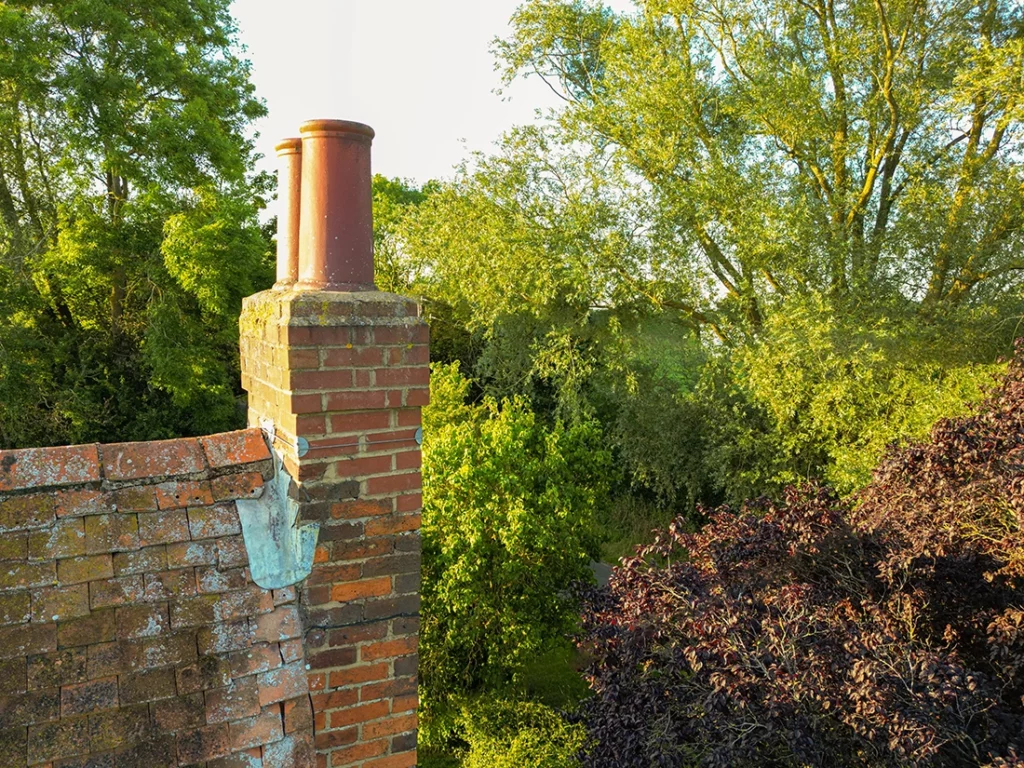
For many roof inspections, the most useful output is still a clear, sharp, well-composed image. Roofers, surveyors, property managers and building owners often need to see tiles, slates, flashing, gutters, chimneys, rooflights, fixings, valleys and roof edges clearly.
The Mavic 4 Pro’s camera system makes it a strong option for this type of visual inspection.
Why it suits roof inspections
The Mavic 4 Pro is useful for:
- pitched roof photography
- commercial roof condition images
- chimneys and roof details
- gutters and roof edges
- rooflights and skylights
- general building inspection imagery
- situations where image quality matters
- inspections where thermal imaging is not needed
The telephoto options are particularly useful because roof inspection work should not rely on flying dangerously close to buildings. A drone with useful telephoto reach gives the operator more flexibility to keep safer distances while still capturing detail.
Limitations
The Mavic 4 Pro is not a thermal drone. If the inspection requires heat loss patterns, solar panel hotspots or moisture-related thermal indicators, this is not the right tool.
It is also a consumer/prosumer camera drone rather than a dedicated enterprise inspection platform. That does not make it weak, but it does mean it is better suited to visual inspection photography than technical inspection workflows.
Who should buy it?
Buy the DJI Mavic 4 Pro if you want the best visual roof inspection drone and do not need thermal imaging.
Best Mapping-Style Inspection Drone: DJI Mavic 3 Enterprise
The DJI Mavic 3 Enterprise is the best choice where roof inspection overlaps with mapping, measurement or structured site documentation.
It is not the best thermal choice, and it is not the newest visual camera drone. But it still has a strong place in inspection work because it is built around enterprise mapping and inspection workflows.
The key advantage is that it is more work-focused than a normal camera drone. It is especially relevant where roof inspections are part of larger site surveys, construction progress records, orthomosaics, mapping outputs or repeatable documentation.
Why it suits roof inspections
The Mavic 3 Enterprise is useful for:
- roof mapping
- commercial site documentation
- construction roof progress
- orthomosaic-style outputs
- repeat inspection routes
- measured site records
- property and land inspection workflows
- building photography where workflow matters
Its mechanical shutter is useful for mapping-style capture, while the tele camera can help with inspection detail.
Limitations
For pure visual image quality, the Mavic 4 Pro is the better pick. For thermal inspection, the Matrice 4T or Mavic 3 Thermal are better choices.
The Mavic 3 Enterprise is strongest when the job is not just “take roof photos”, but “capture structured inspection or mapping data”.
Who should buy it?
Buy the DJI Mavic 3 Enterprise if roof inspections are part of a broader mapping, surveying or site documentation workflow.
👉 Check price: DJI Mavic 3 Enterprise
👉 Drone Mapping Explained for UK Beginners
👉 What Is a Drone Orthomosaic?
Best Value Roof Inspection Drone: DJI Air 3S
The DJI Air 3S is the best value option for roof inspection photography.
It is not an enterprise inspection drone. It does not have thermal imaging. It is not the best option for serious commercial roof survey work. But for visual roof checks, it gives a strong balance of camera quality, portability, flight performance and price.
For many people, the Air 3S is the sensible middle ground. It is more capable than a small beginner drone but much cheaper and simpler than enterprise inspection platforms.
Why it suits roof inspections
The Air 3S is useful for:
- basic roof photography
- gutters and roof edges
- visible tile or slate damage
- chimney and flashing checks
- property maintenance records
- simple commercial roof overviews
- users who need good images without enterprise cost
The medium tele camera is useful because it gives more framing flexibility than a single wide-angle drone. That matters for roof inspection work because a wide-only camera can force the operator to get closer than is ideal.
Limitations
The Air 3S is not a thermal drone. It is also not the right tool for professional thermal reporting, survey-grade mapping or complex industrial inspection work.
For serious roof inspection businesses, it may be a stepping stone rather than the final setup.
Who should buy it?
Buy the DJI Air 3S if you need a capable visual drone for roof checks and want the best balance of cost and usefulness.
Best Compact Roof Inspection Drone: DJI Mini 4 Pro
The DJI Mini 4 Pro is the best compact option for occasional roof checks.
It is small, light, easy to carry and capable of producing good images in the right conditions. For simple visual checks on accessible sites, it can be useful.
However, it should not be treated as the best professional roof inspection drone.
Why it suits simple roof checks
The Mini 4 Pro is useful for:
- occasional roof photos
- basic visual checks
- small properties
- users who value portability
- low-risk, simple inspection tasks
- quick documentation where conditions are good
Its small size makes it easy to carry and quick to deploy. That can be useful for tradespeople, property owners or content creators who only need simple roof imagery.
Limitations
The Mini 4 Pro is lightweight, which means wind can be more of a concern. It does not have thermal imaging. It does not have the same zoom flexibility as larger multi-camera drones. It is not the best choice for complex roof inspection work or professional reporting.
For serious inspection work, choose the DJI Air 3S, Mavic 4 Pro, Mavic 3 Enterprise or Matrice 4T instead.
Who should buy it?
Buy the DJI Mini 4 Pro if you need a small, portable drone for occasional simple roof photography.
Best Thermal Roof Inspection Drone: DJI Matrice 4T
The best thermal drone for roof inspections is the DJI Matrice 4T.
Thermal roof inspection is where ordinary camera drones can fall short. A normal camera can show visible damage, but it cannot show heat patterns. A thermal drone can help identify surface temperature differences that may relate to insulation issues, moisture indicators, solar panel hotspots or overheating equipment.
The Matrice 4T is the best choice because it combines thermal imaging with strong visual inspection capability.
When thermal is worth paying for
Thermal is worth considering for:
- commercial flat roofs
- roof moisture indicators
- heat loss surveys
- solar panel inspections
- industrial roofs
- rooftop plant
- electrical hotspots
- fire or emergency response work
Thermal is not automatically needed for every roof inspection. If the job is simply to photograph broken tiles, blocked gutters or chimney damage, a normal visual drone may be enough.
Thermal inspection warning
A thermal image does not prove a defect by itself. It shows surface temperature differences.
Those differences may be caused by moisture, missing insulation, solar heating, material changes, reflection, airflow, shading, recent rain or other factors. Thermal data needs proper interpretation.
Do You Need Thermal Imaging for Roof Inspections?
You only need thermal imaging if the inspection question involves heat patterns.
For example, thermal imaging may be useful if you are looking for:
- insulation problems
- possible trapped moisture
- solar panel hotspots
- overheating components
- heat loss patterns
- flat roof anomalies
- fire hotspots
You do not need thermal imaging for every roof job. Many roof inspections are visual. Broken tiles, slipped slates, blocked gutters, damaged leadwork, chimney defects and cracked ridge mortar can usually be inspected with a normal camera.
The mistake is buying a thermal drone because it sounds professional, rather than because the work needs thermal data.
For most visual roof inspection work, the DJI Mavic 4 Pro or DJI Air 3S makes more sense. For genuine thermal roof or solar work, choose the DJI Matrice 4T.
Do You Need Zoom for Roof Inspections?
Yes, useful zoom is one of the most important features for roof inspection drones.
Roof inspection often involves obstacles, buildings, chimneys, trees, gutters, parapets, rooflights, solar panels and neighbouring properties. The safest inspection is not always the closest inspection.
A drone with useful telephoto capability allows the operator to capture detail from a more sensible distance.
Zoom is useful for:
- chimney pots
- flashing
- gutters
- roof edges
- high-level fixings
- rooflights
- cladding details
- solar panels
- fragile or awkward roof areas
Optical or dedicated telephoto camera options are usually more useful than simply cropping a wide-angle image later.
Camera Quality Matters More Than Video Specs
Roof inspection work is usually about evidence, not cinematic footage.
High-quality still images are often more useful than impressive video specifications. A roofer, surveyor, property manager or client needs to see the condition clearly.
Important camera features include:
- sharp still images
- good dynamic range
- useful telephoto options
- stable gimbal
- accurate focus
- clear detail in shadows and highlights
- reliable image capture
- good screen visibility on the controller
Video can be useful for overviews, but photos are usually easier to inspect, annotate and include in reports.
Obstacle Sensing and Flight Control
Obstacle sensing matters because roof inspection often happens near buildings and objects.
A drone may need to fly near:
- chimneys
- aerials
- gutters
- rooflights
- trees
- solar panels
- parapets
- cables
- walls
- rooftop plant
Obstacle sensing is helpful, but it does not replace careful flying. Thin branches, wires, reflective surfaces and difficult roof details can still be challenging.
The best inspection drone is one that gives the pilot enough control, stability and awareness to work safely without needing to fly too close.
Drone Roof Inspection Features Compared
| Feature | Why It Matters |
| High-resolution stills | Clear evidence for reports and diagnosis |
| Telephoto/zoom camera | Detail without flying too close |
| Thermal camera | Heat patterns, solar hotspots and moisture indicators |
| Obstacle sensing | Better awareness near buildings and roof details |
| Stable hover | Easier close inspection and framing |
| Good controller screen | Helps review details on site |
| Flight time | Reduces pressure during larger inspections |
| Wind resistance | Important around exposed roofs |
| RTK/PPK | Useful for mapping and repeatable site outputs |
| Reporting workflow | Turns images into usable inspection evidence |
Which Drone Should You Buy?
For professional roof inspection businesses, buy the DJI Matrice 4T if thermal imaging and enterprise inspection features are part of the work.
For high-quality visual roof inspections without thermal, buy the DJI Mavic 4 Pro.
For mapping-style inspections or structured site documentation, buy the DJI Mavic 3 Enterprise.
For a sensible mid-range visual inspection drone, buy the DJI Air 3S.
For occasional lightweight roof checks, buy the DJI Mini 4 Pro.
The best choice depends on the work, but the hierarchy is clear:
Matrice 4T for serious professional inspection. Mavic 4 Pro for the best visual inspection. Air 3S for value. Mini 4 Pro for portability.
UK Rules for Roof Inspection Drones
Drone roof inspections in the UK must be planned around the rules, not just the drone.
The requirements depend on the drone, location, airspace, weight, class, people nearby, operating environment and risk level.
Some lower-risk roof inspection work may fit within the Open Category. More complex work may require Specific Category authorisation, insurance, permissions, risk assessment and suitable pilot competency.
Roof inspections often happen near buildings, people, gardens, roads, commercial premises or neighbouring properties. That makes planning important.
Privacy also matters. A roof inspection drone may accidentally capture neighbouring gardens, windows, vehicles or people. Professional work should be planned carefully and handled responsibly.
This guide is for general technical information only and is not legal advice. Always check current UK CAA guidance before carrying out drone inspection work.
👉 Do You Need a Licence to Fly a Drone in the UK?
👉 Flyer ID vs Operator ID Explained
What Drone Roof Inspections Can Show
A drone roof inspection can show visible evidence such as:
- cracked tiles
- slipped slates
- missing ridge mortar
- damaged flashing
- blocked gutters
- chimney defects
- rooflight damage
- moss and debris
- standing water
- visible flat roof damage
- damaged solar panels
- access limitations
- condition at the time of inspection
A drone can create a clear visual record that can be reviewed, shared and compared later.
That is one of its biggest strengths.
What Drone Roof Inspections Cannot Always Prove
A drone inspection cannot always prove:
- the exact source of a leak
- the condition beneath roof coverings
- hidden membrane failure
- internal damp causes
- timber condition
- structural safety
- concealed rot
- wiring faults
- material strength
- whether a thermal anomaly is definitely a defect
A drone can show evidence. It can highlight areas that need closer inspection. It can reduce unnecessary access risk. But it does not replace every hands-on inspection.
The best roof inspection workflow combines drone imagery with professional judgement.
Best Drone for Roof Inspections UK: Final Verdict
The best drone for roof inspections depends on the level of work.
For serious professional roof inspection, commercial buildings, solar panels and thermal workflows, the best choice is the DJI Matrice 4T.
For high-quality visual inspection without thermal imaging, the best choice is the DJI Mavic 4 Pro.
For mapping-style inspection and structured site documentation, choose the DJI Mavic 3 Enterprise.
For a value-focused visual inspection drone, choose the DJI Air 3S.
For occasional simple roof checks, choose the DJI Mini 4 Pro.
The main buying mistake is choosing a drone based only on video specs. Roof inspection work needs clear evidence, safe controllability, useful zoom, stable flight and the right sensor for the job.
If roof inspection is a professional service, buy the drone that matches the evidence you need to capture, not just the cheapest drone that can fly over a roof.
FAQ
What is the best drone for roof inspections in the UK?
The best overall drone for professional roof inspections is the DJI Matrice 4T. For visual-only roof inspections, the DJI Mavic 4 Pro is the best choice. For value, the DJI Air 3S is a strong option.
Can I use a DJI Mini 4 Pro for roof inspections?
Yes, the DJI Mini 4 Pro can be used for simple visual roof checks in suitable conditions. It is not the best option for serious professional inspection work, thermal imaging or windy conditions.
Do you need a thermal drone for roof inspections?
Not always. Thermal imaging is useful for heat loss, moisture indicators, solar panel hotspots and electrical heat patterns. For visible roof damage, a normal camera drone may be enough.
What is the best thermal drone for roof inspections?
The DJI Matrice 4T is the strongest thermal drone choice for serious roof inspection work, especially for commercial roofs, solar panels and professional inspection workflows.
Is zoom important for roof inspections?
Yes. Zoom or telephoto capability helps capture roof detail without flying too close to buildings, chimneys, gutters, aerials or roof-mounted equipment.
Is the DJI Air 3S good for roof inspections?
The DJI Air 3S is a good value option for visual roof inspection photography. It is not a thermal or enterprise inspection drone, but it is capable for many basic roof checks.
Is the DJI Mavic 4 Pro good for roof inspections?
Yes. The DJI Mavic 4 Pro is one of the best non-thermal drones for visual roof inspections because of its strong camera system and telephoto flexibility.
Can drones find roof leaks?
Drones can help identify visible roof issues and thermal patterns that may be associated with moisture, but they cannot always confirm the exact source of a leak.
Can a drone replace a roof survey?
No. A drone can support a roof inspection by capturing visual or thermal evidence, but some issues still need physical inspection or specialist interpretation.
Do I need a licence for roof inspection drones in the UK?
It depends on the drone, location and operation. Some work may fit within the Open Category, while more complex roof inspection work may require Specific Category authorisation.
Can drones inspect commercial roofs?
Yes. Drones are very useful for commercial roof inspections, especially for flat roofs, rooftop plant, rooflights, solar panels, gutters and hard-to-access areas.
What drone features matter most for roof inspections?
The most important features are high-quality still images, useful zoom, stable hovering, obstacle sensing, good flight time, wind resistance and thermal imaging where heat patterns matter.
Is a 4K drone enough for roof inspections?
4K video is not the main issue. Roof inspections usually need clear still images and useful detail. Camera quality, zoom and image sharpness matter more than video resolution alone.
Should roofers buy a drone?
A drone can be useful for roofers who regularly need visual roof checks, quote evidence or maintenance records. For serious professional use, choose a drone that matches the type of inspection work being carried out.
What is the best budget drone for roof inspections?
The DJI Air 3S is the best value option for visual roof inspection work. The DJI Mini 4 Pro is cheaper and more portable, but less suitable for serious inspection use.